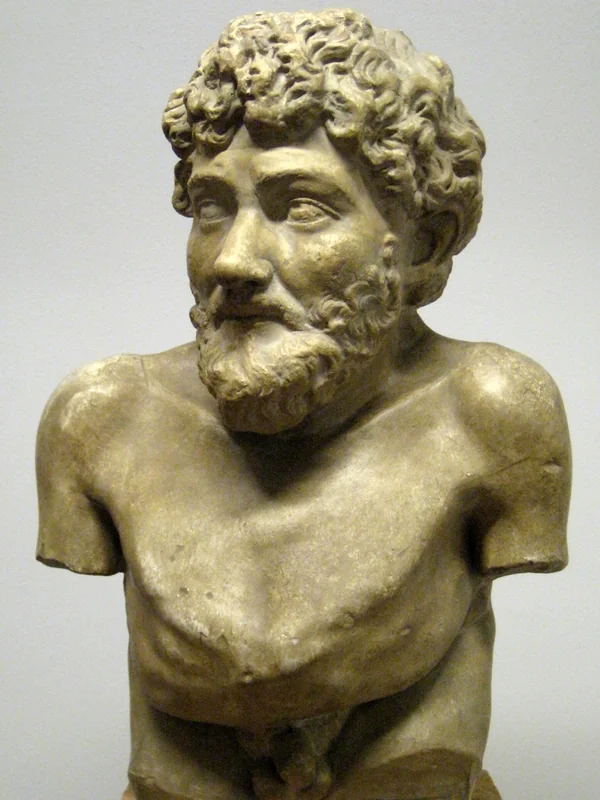

"After all is said and done, more is said than done."— Aesop
Aesop
The fable-teller of ancient Greece
Almost everything about Aesop is a mystery. Ancient writers said he lived in Greece about 2,500 years ago. They said he was a slave who earned his freedom because he was so clever. They said he worked as a storyteller for kings and rulers.
Some of those things are probably true. Others are probably legend. The ancient Greeks loved making up biographies of famous people, and Aesop got the full treatment, wild stories about his ugly looks, his quick mouth, and his eventual murder at a place called Delphi.
Quick Facts
- Lived: About 620–564 BCE, 2,500 years ago
- From: Ancient Greece
- Job: Storyteller (and possibly a slave)
- Famous for: Hundreds of short fables with animal characters
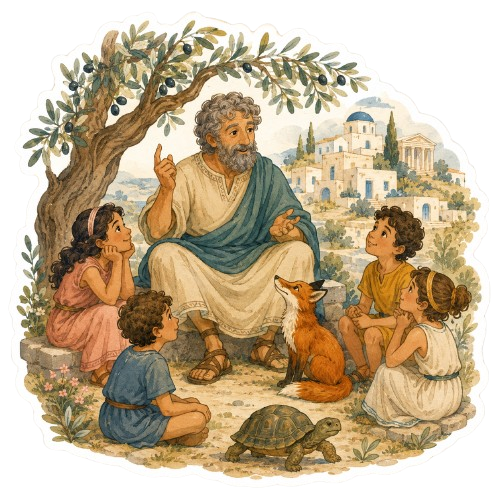
Aesop's fables weren't written down by Aesop. They were told out loud for hundreds of years before anyone wrote them on paper. The first written collections came at least 200 years after Aesop's death.
His Famous Tales
Read Aesop's fables on Worldly
Aesop's fables are perfect for young readers, short, fun, and full of clever lessons. On Worldly, every page is adapted to your reading level.
What We Know, And Don't
A life shrouded in legend
Almost everything we 'know' about Aesop comes from ancient writers who lived hundreds of years after him. So treat it like stories.
Born somewhere in the Greek world
Ancient sources say Aesop is born in Thrace or Phrygia, both ancient lands that were part of the Greek world. Some sources say he was Ethiopian. We aren't sure.
He's a slave (probably)
Most ancient sources agree that Aesop spent at least part of his life as a slave on the Greek island of Samos. He's said to have served at least two different masters.
He earns his freedom
Stories say Aesop was so clever and useful that his last master, a philosopher named Iadmon, freed him. He becomes a wandering storyteller and adviser to kings.
He travels and tells stories
Aesop is said to have traveled across Greece, Egypt, and Lydia (modern-day Turkey), telling fables. Kings hire him as an adviser because his stories make hard ideas easy to understand.
He dies at Delphi
Legend says Aesop went on a mission to Delphi and angered the priests there. They threw him off a cliff. Whether this is true or not, Greek writers said so for hundreds of years.
The fables get written down
About 200 years after Aesop's death, a Greek philosopher named Demetrius of Phalerum writes down a collection of the fables. That collection is lost, but other writers preserve the stories.
Three of His Most Famous Fables
Tales every kid still hears
Each fable is short, sometimes just a paragraph. Each one ends with a lesson. Aesop's fables are some of the most-copied stories in history.
Fable
The Tortoise and the Hare
A fast hare and a slow tortoise race. The hare is so confident he stops for a nap. The tortoise keeps walking, and wins. Slow and steady wins the race.
Fable
The Boy Who Cried Wolf
A shepherd boy keeps shouting "WOLF!" as a joke. The villagers come running. Each time, no wolf. Finally a real wolf shows up, and no one comes. Liars are not believed even when they tell the truth.
Fable
The Fox and the Grapes
A fox tries and fails to reach a bunch of grapes hanging high on a vine. He walks away grumbling that the grapes were sour anyway. People often pretend not to want what they cannot have.
Wait… really?!
Six surprising things about Aesop
He may not have been one person
Many historians think the name 'Aesop' may have been used for stories from MANY different storytellers. The body of fables grew over hundreds of years.
His fables were oral for centuries
Aesop didn't write his fables down. They were told out loud for hundreds of years before anyone wrote them on paper. That's why so many versions exist.
Other cultures have similar tales
Ancient India, Africa, and the Middle East all have short animal-fables that look a LOT like Aesop's. Some scholars think the tradition was bigger than just Greece.
Romans rewrote them
About 500 years after Aesop, a Roman slave named Phaedrus turned the fables into Latin poems. That's the version most of Europe inherited.
He inspired a phrase, 'sour grapes'
We still say 'sour grapes' today to describe someone pretending they didn't want something they couldn't get. That's straight from Aesop's fox.
The fables are still being added to
New 'Aesop's fables' have been written all the way through history. Modern collections often include stories that weren't part of the original Greek tradition.
Good questions, answered
Aesop FAQ
Was Aesop a real person?+
Maybe! Ancient Greek writers said he was real and lived around 620–564 BCE. But many historians today think 'Aesop' may have become a name for a tradition of fables that came from many storytellers over hundreds of years.
Did he write the fables down himself?+
No. The fables were told out loud for hundreds of years before anyone wrote them on paper. The first written collections appeared at least 200 years after Aesop's death.
Why are the fables still famous?+
Each fable is short, easy to remember, and ends with a clear lesson. They work as bedtime stories, school lessons, and even modern memes. They've been the most-copied stories in Western history.
What age are Aesop's fables good for?+
All ages! Aesop's fables work as read-alouds from toddler-age, and as chapter books from age 6 and up. The Worldly versions are adapted to fit each reader.
How many fables are there?+
Different collections count differently, somewhere between 300 and 700 'classic' fables are usually attributed to Aesop. Some are very old; some were added centuries after his death.
Ready for an adventure?
Dive in with Aesop
More Aesop tales coming soon to Worldly. Sign up to be the first to know.