"Fear of danger is ten thousand times more terrifying than danger itself."— Daniel Defoe, Robinson Crusoe
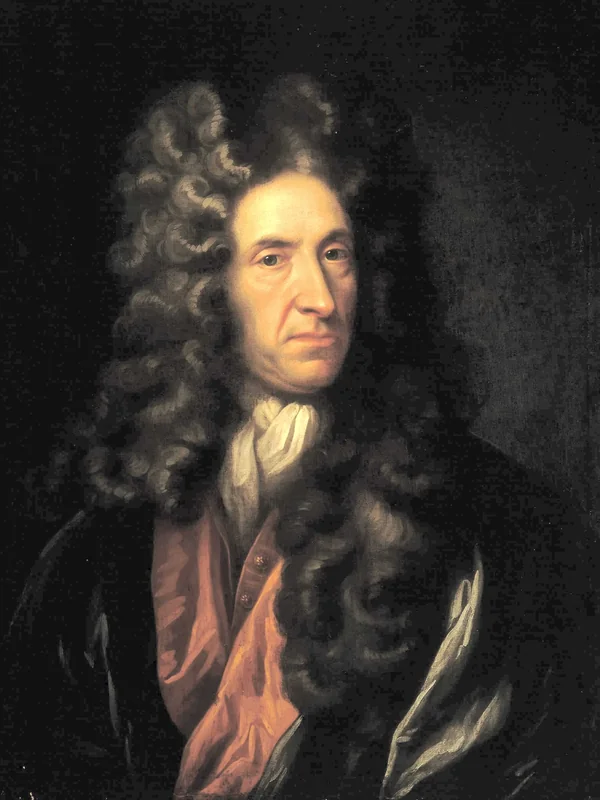
Daniel Defoe
The reporter who wrote the first English novel
Daniel Defoe was born in London around 1660, almost exactly 100 years before the United States existed and 300 years before airplanes. He lived in a noisy, dangerous, exciting city.
Defoe wanted to be a successful businessman. He sold wool, hosiery, and wine. He tried buying ships. He invested in a diving bell company. He went spectacularly bankrupt, TWICE, owing thousands of pounds.
Quick Facts
- Born: 1660
- From: London, England
- Job: Writer, journalist, businessman, spy
- Famous for: Robinson Crusoe
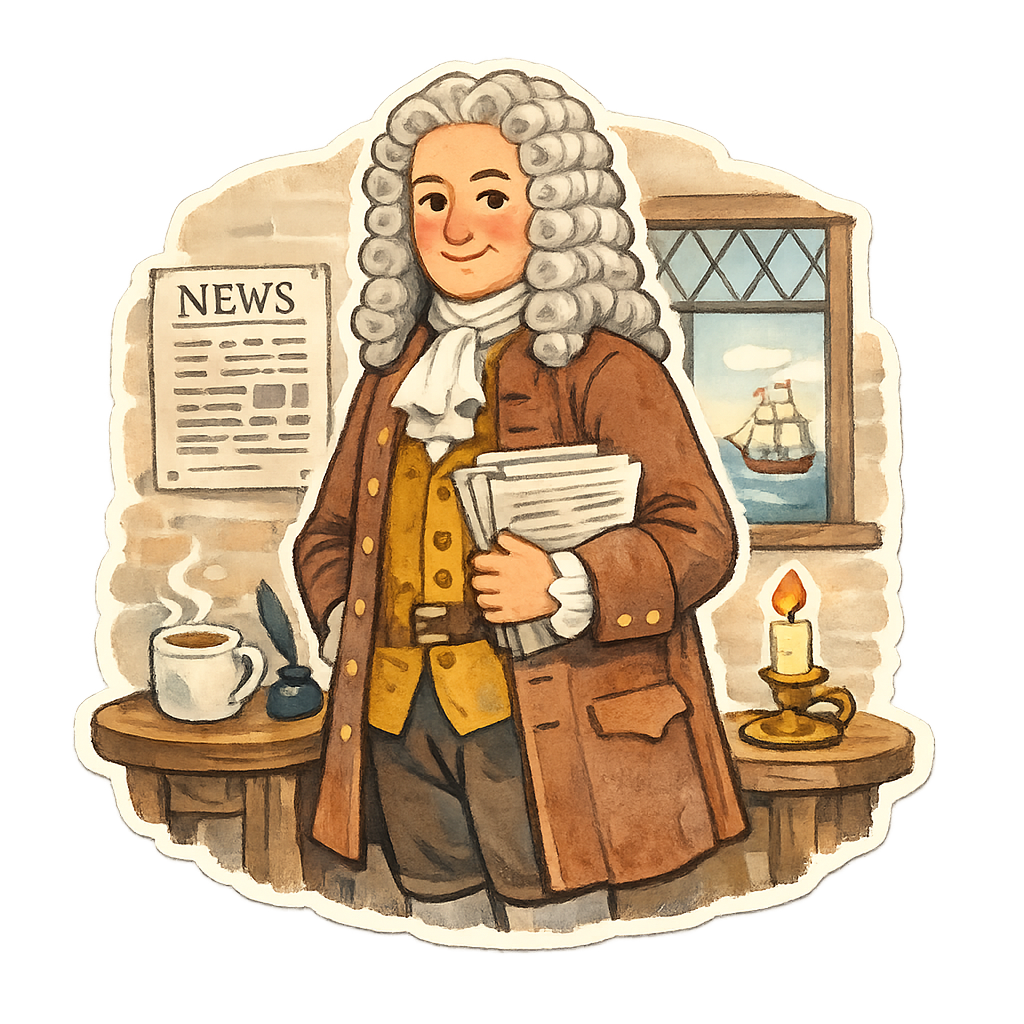
Defoe wrote SO much (probably over 500 pieces!) that scholars are still arguing about which works are really his and which were ghostwritten.
His Famous Stories
Read Defoe's stories on Worldly
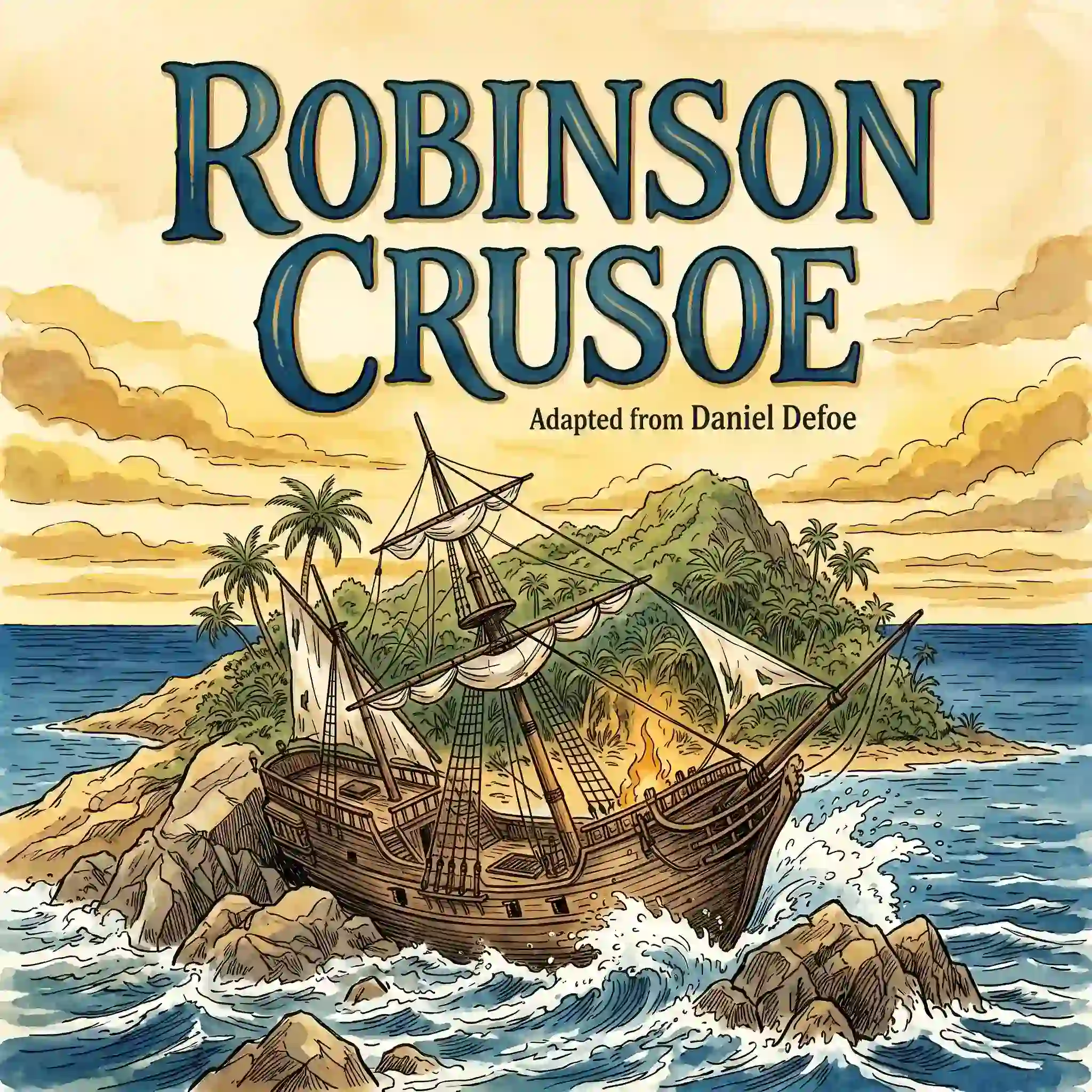
Crusoe is the great-great-grandfather of every shipwreck-survival story. On Worldly, every page is adapted to your reading level.
 ★ On Worldly
1719After a shipwreck, Crusoe washes up alone on a tropical island. He has to figure out food, shelter, water, fire, and how to stay sane, for twenty-seven years.
1722A clever girl is born in prison and has to survive by her wits in a tough world. (Adult themes, best for older readers.)
1722A made-up but very real-feeling diary of the Great Plague that hit London in 1665. Defoe was only 5 then, but his journal feels like an eyewitness account.
His Life, Year by Year
Bankruptcies, jail, and one famous book
Defoe's life was packed with failures, fights, and second chances. The famous novel came near the very end.
Born in London
Daniel is born in London to a butcher named James Foe. (Daniel added the "De" later to sound fancier.) The plague hits London when he's 5. The Great Fire hits when he's 6. Quite a childhood.
He marries and goes into business
Daniel marries Mary Tuffley, whose family is well-off. He starts a business selling wool and hosiery. Then ships. Then wine. He's busy.
Bankruptcy #1
Daniel's businesses fail spectacularly. He owes thousands of pounds, a HUGE sum for the time. He spends time in debtor's prison.
He writes a satire and goes to jail
Daniel writes a pamphlet pretending to call for the execution of all non-Anglican Christians (he's mocking that idea, he IS one of them). The government doesn't get the joke. He's pilloried (locked in stocks in public) and sent to prison.
He starts a newspaper from jail
From prison, Daniel starts The Review, one of the first English magazines. He writes most of it himself. He's released and the magazine runs for 9 years.
Robinson Crusoe
At age 59, Daniel publishes Robinson Crusoe, a long, realistic novel about a man stranded on a tropical island. It's a smash. Many historians call it the first English novel.
Moll Flanders and a plague book
Defoe publishes Moll Flanders (a wild novel about a thief and survivor) AND A Journal of the Plague Year (a vivid pretend-memoir of the London plague of 1665). He's incredibly productive.
He dies poor
Defoe dies in London at around 70, bankrupt yet again, hiding from creditors. He left behind books that would shape what novels could be for centuries to come.
What He Invented
The Crusoe template
Robinson Crusoe didn't just become famous. It became a template, every shipwreck-on-an-island story since has been a remix of Defoe's idea.
Crusoe · 1719
The survival story
Crusoe arrives on his island with almost nothing. The book is mostly about how he figures things out, fences, food, shelter, calendar, writing. Every survival story since (Swiss Family Robinson, Hatchet, The Martian) owes Crusoe.
Crusoe · 1719
The realistic novel
Before Crusoe, English fiction was mostly fairy tales or moral fables. Defoe wrote like a journalist, full of small, specific details. It made readers feel like they were watching it happen.
Crusoe · 1719
27 years alone
Crusoe is on his island for twenty-seven years. He keeps a calendar carved into a post. He goes through hope, despair, faith, curiosity. It's not just an adventure, it's a long, real-feeling life.
Wait… really?!
Six surprising things about Daniel Defoe
He added the 'De' himself
He was born Daniel Foe. He started signing his name 'De Foe' as an adult to sound more impressive. The 'De' stuck.
Crusoe was based on a real shipwreck
A Scottish sailor named Alexander Selkirk was marooned on a Pacific island for four years. Defoe heard the story and used it as the seed for Crusoe, though he made the island in his book a much longer, much wilder experience.
He wrote over 500 pieces
Defoe was incredibly prolific. Books, pamphlets, articles, columns, hundreds and hundreds of them. Even now, scholars are still trying to figure out which writings are definitely his.
He was a real-life spy
Defoe spent years working as a secret agent for the English government, reporting on political plots and helping influence the union of England and Scotland. He kept this very quiet.
He went to jail for a joke
Defoe wrote a satirical pamphlet that the government took seriously. He was put in the stocks (locked in a public wooden frame to be jeered at). Friends pelted him with FLOWERS instead of trash, a kind of victory.
He died in hiding
Defoe was always running from creditors. In his last days he was hiding from people he owed money to. Even his famous novel hadn't made him truly rich.
Good questions, answered
Daniel Defoe FAQ
Is Robinson Crusoe a true story?+
Not exactly, but it was inspired by one. A real Scottish sailor named Alexander Selkirk was marooned on a Pacific island for four years. Defoe used Selkirk's experience as a starting point and turned it into a much longer, more dramatic fictional story.
What is 'the first English novel'?+
Many scholars credit Robinson Crusoe with being the first novel in English, meaning a long work of realistic fiction with a single main character whose inner life we follow over time. There were stories before, but Crusoe set the pattern.
Was Defoe really a spy?+
Yes! For years Defoe worked secretly for English politicians, gathering intelligence and writing pro-government articles. He helped argue for the union of England and Scotland in 1707.
What age is Robinson Crusoe good for?+
The original is dense and old-fashioned, best for older readers. The Worldly version is adapted to be gentle and fast-moving, so kids ages 7+ can enjoy the island survival adventure on their own.
Why was he in debt all the time?+
Defoe loved big risky business deals. He bought ships, started factories, invested in inventions, and most of his ventures failed. He kept going bankrupt and starting over. He died in hiding from people he owed money to.
Ready for an adventure?
Dive in with Daniel Defoe
Start with Robinson Crusoe, adapted to fit your reading level. Free in the Worldly app.