"There is something delightful in the rugged simplicity of the country, and the open air."— Howard Pyle
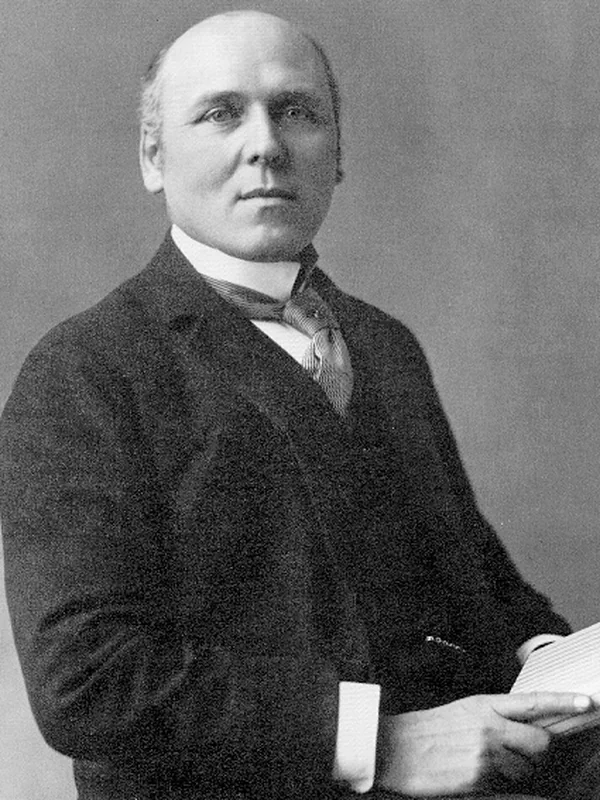
Howard Pyle
The man who drew pirates
Howard Pyle grew up in Wilmington, Delaware, in a Quaker family. He loved drawing from the time he could hold a pencil. His mom read him knight stories and English ballads when he was small, and he never stopped picturing them.
As a young man, Howard moved to New York to be an illustrator for magazines. He was good at it. Scribner's, Harper's, St. Nicholas, all the big magazines of the day used his pictures. He drew Civil War scenes, colonial American history, and best of all, pirates and knights.
Quick Facts
- Born: March 5, 1853
- From: Wilmington, Delaware, USA
- Job: Writer & illustrator
- Famous for: The Merry Adventures of Robin Hood, Otto of the Silver Hand, pirate art
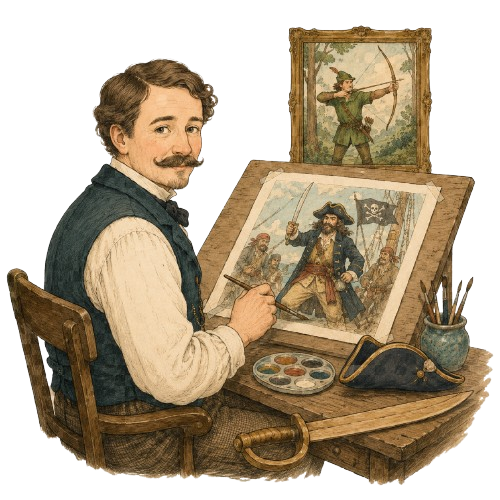
Almost every picture of pirates in modern movies and storybooks (bandanas, eye patches, treasure chests, peg legs) was either invented or popularized by Howard Pyle's illustrations.
His Famous Stories
Read Pyle's stories on Worldly
Pyle's adventure stories are exciting and packed with action. On Worldly, every page is adapted to your reading level.
1883Robin Hood and his Merry Men live in Sherwood Forest, fight the Sheriff of Nottingham, and steal from the rich to give to the poor. THE Robin Hood book.
1888A knight's son grows up in a peaceful monastery, then is thrown into the violent world of his father's feuds. A serious story for older kids.
1903Pyle's collected pirate stories, with his famous illustrations. The book that defined how kids picture pirates.
His Life, Year by Year
From local boy to American storyteller
Pyle's career stretched from after the Civil War to the early 20th century. He shaped how Americans pictured their past.
Born in Delaware
Howard Pyle is born in Wilmington, Delaware to a Quaker family.
Off to New York
At 23, Howard moves to New York to try to become a magazine illustrator. He sells his first piece quickly and never looks back.
Robin Hood
Howard publishes The Merry Adventures of Robin Hood, both written AND illustrated by him. It becomes the most influential Robin Hood book ever written.
Otto of the Silver Hand
Howard publishes Otto of the Silver Hand, a darker tale about a knight's son in medieval Germany. It shows kids could handle serious stories.
He starts a free art school
Back in Wilmington, Howard opens a free school for illustrators. Students he trains will become some of the most famous American illustrators of the 20th century, including N.C. Wyeth (father of Andrew Wyeth) and Maxfield Parrish.
Book of Pirates
Howard publishes his collected pirate art and tales. The book defines pirate fashion for the next hundred years.
He dies in Italy
Howard travels to Italy to study Renaissance painting. He dies suddenly in Florence at age 58 of a kidney infection. He's still one of the most important American illustrators in history.
What He Created
Three things Pyle gave American storytelling
Pyle did three big things, and you can still see them in books and movies today.
Robin Hood · 1883
The standard Robin Hood
Pyle's version of Robin Hood, the Merry Men hunting in Sherwood Forest, the rescue of Maid Marian, the archery contest, became THE version that all later books and movies copied.
Book of Pirates · 1903
Pirate fashion
Bandanas, eye patches, gold earrings, peg legs, treasure chests with gold pieces spilling out. Pyle either invented or popularized almost every visual cliché of pirates we know today.
Brandywine School
He trained the next generation
Pyle's free art school in Delaware trained N.C. Wyeth, Maxfield Parrish, and dozens of other artists who went on to define American illustration for half a century.
Wait… really?!
Six surprising things about Howard Pyle
He invented modern pirate look
Pyle's pirate illustrations established almost every cliché of pirates we know today, bandanas, eye patches, treasure chests, peg legs. Every modern pirate movie owes him.
He drew AND wrote
Most writers can't draw. Most illustrators don't write books. Pyle did both, brilliantly. His books are full of his own pictures.
He ran a free art school
Pyle opened his Brandywine School in Wilmington and refused to charge tuition. He trained N.C. Wyeth, Maxfield Parrish, and other major American illustrators.
He was a Quaker
Pyle grew up in a Quaker family. The peaceful, plain-spoken Quaker values stayed with him his whole life, even as he illustrated knights swinging swords.
His Robin Hood became THE Robin Hood
Before Pyle's 1883 book, there were dozens of conflicting Robin Hood stories. Pyle's version gathered them into one cohesive tale, and basically every later movie and book follows his version.
He died in Italy
Pyle traveled to Florence late in life to study Renaissance painting. He caught a kidney infection there and died suddenly at age 58. He's buried in Florence.
Good questions, answered
Howard Pyle FAQ
Did he write or draw the pictures?+
Both! Howard Pyle was unusual because he was a great writer AND a great illustrator. His books are full of his own art.
Is his Robin Hood the original?+
No, Robin Hood stories had been told for over 500 years before Pyle. But his 1883 retelling gathered the wildly different versions into one cohesive story. Basically every later Robin Hood movie and book follows Pyle's version.
Did he really invent pirate fashion?+
Mostly! Pyle's illustrations are where bandanas, gold earrings, peg legs, eye patches, and treasure chests overflowing with gold come from. Real pirates didn't always look like that, but our IDEA of pirates is Pyle's.
What age is Robin Hood good for?+
Pyle's Robin Hood works as a read-aloud from age 7, and as a chapter book from age 9. The Worldly version is adapted to fit each reader's level.
Did his art school really train famous illustrators?+
Yes! Pyle's free Brandywine School trained N.C. Wyeth, Maxfield Parrish, and many other major American illustrators who shaped art for the first half of the 20th century.
Ready for an adventure?
Dive in with Howard Pyle
More Pyle stories coming soon to Worldly. Sign up to be the first to know.