"There is nothing, absolutely nothing, half so much worth doing as simply messing about in boats."— Kenneth Grahame, The Wind in the Willows
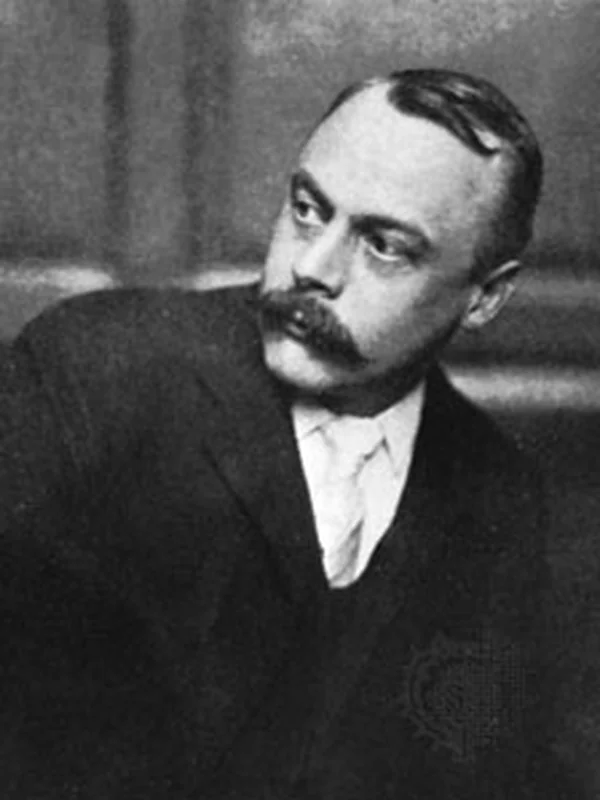
Kenneth Grahame
The banker who wrote about a singing toad
Kenneth Grahame had one of the most respectable, boring grown-up jobs in England: he worked at the Bank of England in London. He wore a suit every day. He took the train to work. He had meetings.
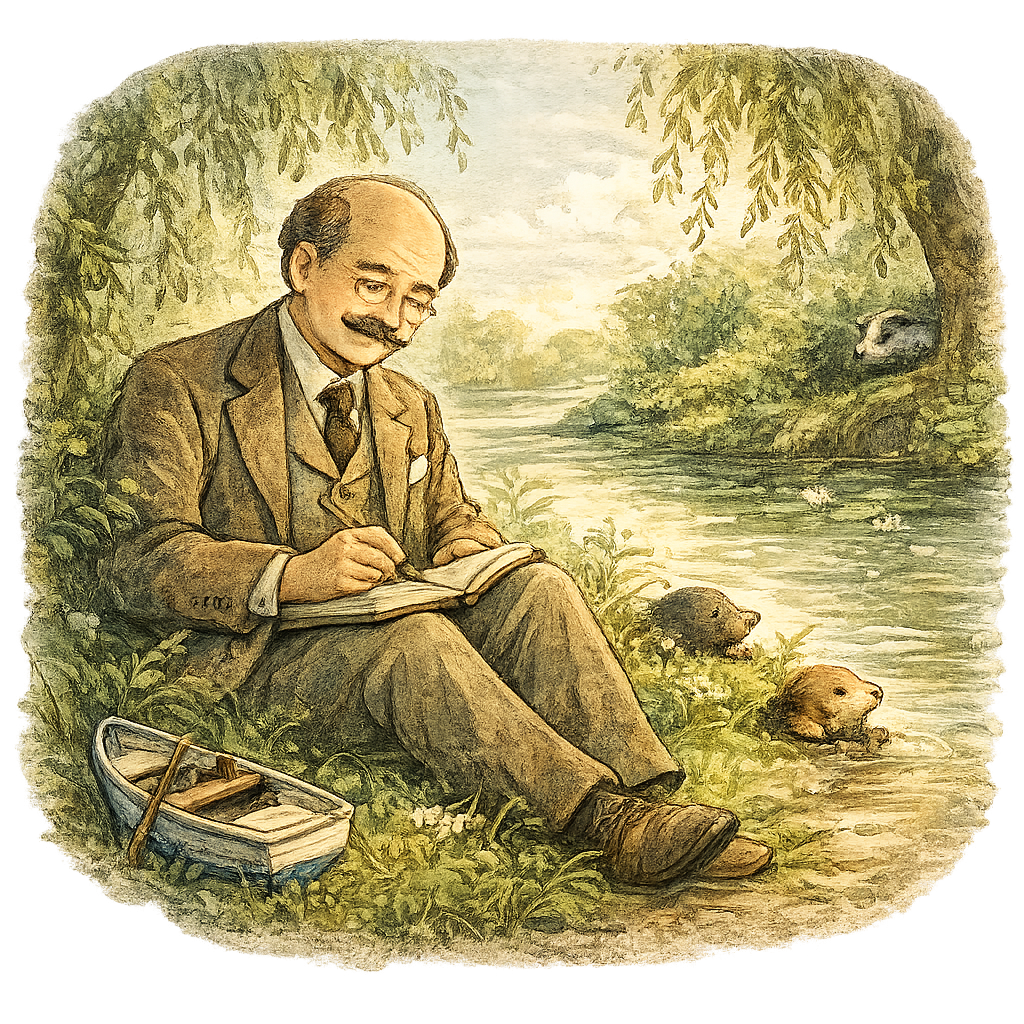
But his real love was the countryside. Specifically, the riverbank near his childhood home in southern England, with its willow trees, otters, moorhens, and slow brown water. As a kid he'd spent every minute he could down by the river.
Quick Facts
- Born: March 8, 1859
- From: Edinburgh, Scotland
- Job: Banker by day, writer by night
- Famous for: The Wind in the Willows
U.S. President Theodore Roosevelt loved The Wind in the Willows so much that he read it again and again, and wrote Grahame a fan letter saying so.
His Famous Story
Read Grahame's story on Worldly
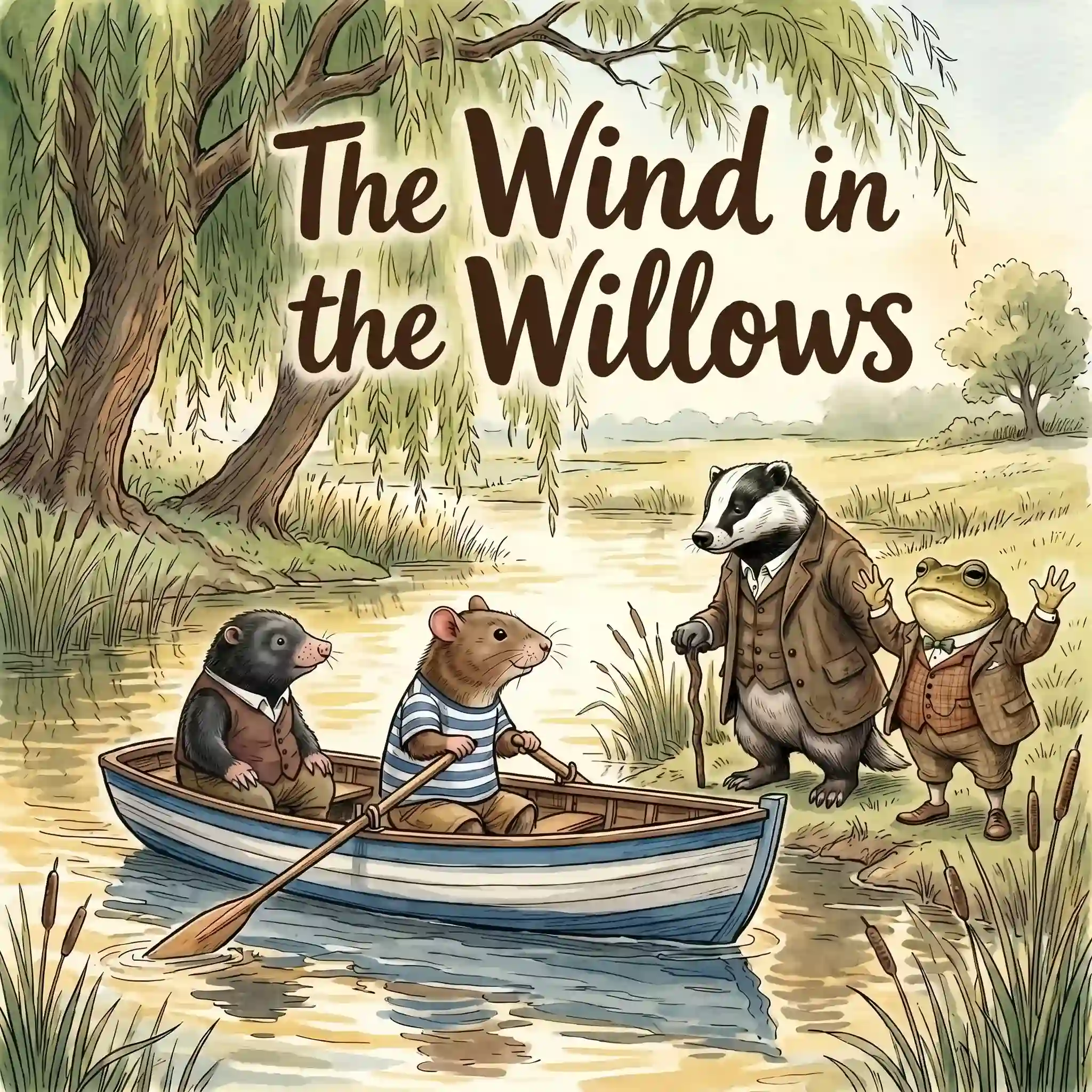
Wind in the Willows is one of the warmest, coziest animal stories ever written. On Worldly, every page fits your reader's level.
 ★ On Worldly
1908Mole leaves his hole and finds a river, and four friends. Together they boat, picnic, rescue one another from danger, and try (and fail) to talk Toad out of crashing more motorcars.
1898A village expects a dragon to be scary. Instead, the dragon is a poet who doesn't want any fighting at all. A boy and a knight have to help him out.
His Life, Year by Year
From bank ledgers to talking toads
Kenneth Grahame's life looked dull on the outside. But inside, he was always sneaking back to the riverbank.
Born in Edinburgh
Kenneth Grahame is born in Edinburgh, Scotland. Soon after his mom dies and his alcoholic father can't care for the kids. The children are sent to live with their grandmother in England.
The riverbank
Kenneth grows up in a house near the River Thames in southern England. He spends every spare hour outside, watching boats, climbing trees, learning the names of birds and animals.
Off to the Bank of England
He wants to go to Oxford. His family can't afford it. Instead Kenneth gets a job at the Bank of England, where he'll work for the next 30 years.
Marriage and a son
Kenneth marries Elspeth Thomson. Their only child, Alastair (nicknamed Mouse), is born the next year. Alastair is the one who will hear the Wind in the Willows stories first.
The bedtime stories
For years Kenneth has told Alastair stories about a Mole, a Rat, a Toad, and a Badger. Now he writes them down as letters and sends them home from a vacation when Alastair refuses to let the stories stop.
The Wind in the Willows
The Wind in the Willows is published. Critics are confused at first, it's not quite a kid's book, not quite for adults. Then kids find it. President Theodore Roosevelt writes Kenneth a fan letter.
He retires from the bank
Now financially comfortable, Kenneth retires from the Bank of England. He never writes another book. He just enjoys the countryside, like he always wanted.
End of a quiet life
Kenneth dies at 73 in his beloved English countryside. His one and only novel for kids has by then become one of the most loved books in the world.
The Riverbank Crew
Four friends who feel like real people
Wind in the Willows is half about animals and half about friendship. The four main characters all feel like someone you might actually know.
Mole
Sweet, curious, easily impressed
Mole has never been out of his hole. When he climbs up into the sunshine and meets Rat, he's amazed by everything. He's the reader, discovering the world right alongside us.
Rat
Wise, patient, loves the river
Rat lives by the river and knows every trick of it. He's calm, kind, and a poet. He says one of the most quoted lines in children's books: "There is nothing, absolutely nothing, half so much worth doing as simply messing about in boats."
Badger
Grumpy, gentle, the boss
Badger lives deep in the Wild Wood. He's gruff and avoids parties, but he has a soft heart and saves the others when they need him most.
Toad
Vain, loud, hilarious disaster
Toad is rich, silly, and obsessed with whatever's new. First it's barge boats. Then it's caravans. Then it's MOTORCARS. He crashes seven of them. His friends try to help him. It doesn't go well.
Wait… really?!
Six surprising things about Kenneth Grahame
Wind in the Willows is his only kids' book
Kenneth wrote a few collections of essays and short pieces, but Wind in the Willows is his ONE major work. He never wrote a sequel, never wrote another novel. One was apparently enough.
Teddy Roosevelt was a huge fan
The U.S. president wrote Grahame letters about how much he loved the book, and read it three times in a row.
Toad was based on his son Alastair
Kenneth's son Alastair was a small, willful, dramatic kid who loved attention. Many readers see him in Toad, the most lovable troublemaker in kids' books.
He was robbed at the bank
In 1903, a man came into the Bank of England with a pistol and shot at Kenneth three times. Kenneth was unharmed, but the robber had been planning to ransom him. Friends called him lucky to be alive.
He retired at 49 and never wrote much again
After Wind in the Willows made him comfortable, Kenneth left the bank and basically stopped publishing. He preferred to walk along rivers and read.
A.A. Milne loved the book
A.A. Milne, the author of Winnie-the-Pooh, adapted Wind in the Willows for the stage and called it 'a book of which we never grow tired.'
Good questions, answered
Kenneth Grahame FAQ
How do you say his name?+
GRAY-um, not GRAY-hayme. The 'h' is silent. It's an old Scottish spelling.
Did he write any other books?+
Not really for kids. He wrote some essay collections (Pagan Papers, The Golden Age) and one short fairy tale, The Reluctant Dragon. But Wind in the Willows is his only novel, and his masterpiece.
Why is Toad in jail at one point?+
Toad keeps stealing motorcars and driving them recklessly. Eventually the law catches him and he ends up in a real dungeon. The book is partly a sweet animal story and partly a wild adventure about a chaotic friend.
What age is Wind in the Willows good for?+
It works as a read-aloud from age 5, and as a chapter book from about age 7. The Worldly version is adapted so kids can read it on their own at their level.
Why is it called Wind in the Willows?+
The willow tree is one of the trees that grow along English riverbanks. The book's setting is a riverbank with willows, where wind in the leaves makes that whispery, peaceful sound. The title is meant to feel like the whole mood of the book.
Ready for an adventure?
Dive in with Kenneth Grahame
Start with The Wind in the Willows, adapted to fit your reading level. Free in the Worldly app.