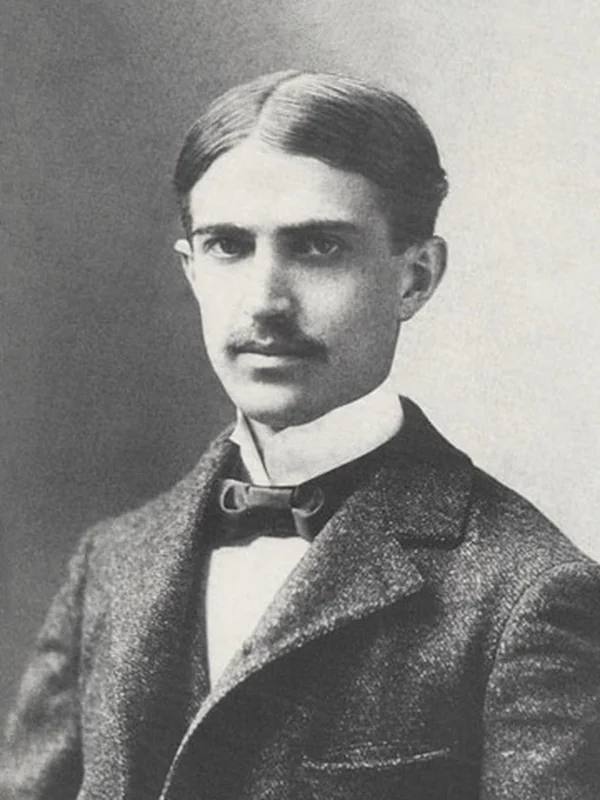

"None of them knew the color of the sky."— Stephen Crane, The Open Boat
Stephen Crane
The young writer who imagined war
Stephen Crane was born in Newark, New Jersey, the 14th and youngest child in his family. His father was a Methodist minister; his mother was a writer for religious magazines. Stephen grew up in a strict household but rebelled against it. He left college after one semester and moved to New York City to be a writer.
He was poor. He lived in cheap rooms and wandered the rough neighborhoods of New York, watching people and taking notes. He wrote his first novel, Maggie, about a girl forced into prostitution by poverty. No one would publish it. He had it printed at his own expense in 1893.
Quick Facts
- Born: November 1, 1871
- From: Newark, New Jersey, USA
- Job: Novelist, journalist, war correspondent
- Famous for: The Red Badge of Courage, Maggie: A Girl of the Streets
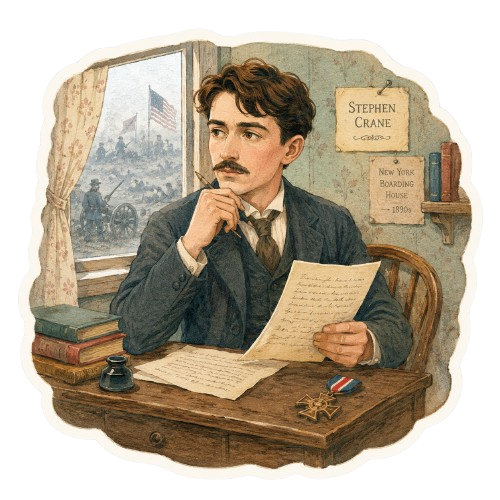
Stephen Crane wrote The Red Badge of Courage in less than a year, before he turned 25, and he had no firsthand experience of war. After the book became famous, he became a war correspondent so he could finally see real battles. He died only four years later.
His Famous Stories
Read Crane's stories on Worldly
Crane wrote short, sharp, vivid stories about people facing hard moments. On Worldly, every page is adapted to your reading level.
His Life, Year by Year
A brilliant 28 years
Stephen Crane packed a full career into a very short life.
Born in New Jersey
Stephen Crane is born in Newark, New Jersey, the youngest of 14 children.
Off to college
Stephen enrolls at Lafayette College. He hates it. He transfers to Syracuse University, where he plays baseball and skips classes. He drops out after one year.
Reporter in New York
Stephen moves to New York City and starts writing newspaper articles. He lives in cheap rooms in the Bowery neighborhood, watching the city's poor.
Maggie self-published
Stephen publishes his first novel Maggie, about a poor New York girl. No publisher will print it. He pays for it himself. It sells almost no copies.
The Red Badge of Courage
At 24, Stephen publishes The Red Badge of Courage. The book is an instant sensation. Real Civil War veterans write him fan letters assuming he served.
War correspondent
Stephen sails to Cuba as a war correspondent. His ship sinks. He spends 30 hours in a small lifeboat with three other men. He writes about it later in The Open Boat.
Covering the Spanish-American War
Stephen covers the Spanish-American War for newspapers. He sees real battle for the first time. He confirms what he'd imagined years earlier was right.
He dies young
Stephen dies of tuberculosis in a German health spa at age 28. He'd written 14 books in 8 years.
What He Brought to Fiction
Three things that made Red Badge feel real
Stephen Crane wrote about war in a way nobody had before. Here's what he did differently.
Red Badge · 1895
Honest fear
Most war stories until then had been about brave heroes. Crane wrote about a soldier who panics, runs, and feels ashamed. The book is about being scared, not pretending you aren't. That was new.
Red Badge · 1895
Inside the soldier's head
The book follows ONE young soldier's thoughts and feelings during one battle. We see what's happening through his confusion. The battle isn't grand, it's chaotic, smoky, terrifying.
Open Boat · 1897
Nature doesn't care
Crane's stories often show ordinary people struggling against a nature that's indifferent to them. Stormy seas, brutal battles, cold winters, none of them care whether you survive. That idea shaped American writers for the next century.
Wait… really?!
Six surprising things about Stephen Crane
He'd never seen a battle when he wrote Red Badge
Stephen wrote The Red Badge of Courage at 24, having never been in a war. He researched battlefield reports and used pure imagination. Real Civil War veterans thought he must have been there.
He survived a real shipwreck
On his way to cover the Cuban revolution in 1897, Stephen's ship sank. He spent 30 hours in a tiny lifeboat with three other men before reaching shore. He turned the experience into one of his most famous short stories.
He was the youngest of 14 kids
Stephen had 13 older siblings. Several died young. His mother and father were strict Methodists, but Stephen rebelled and left home to write.
He worked as a war correspondent
After Red Badge made him famous, Stephen actually became a war reporter, covering the Spanish-American War in 1898. He finally saw real battle, which had only existed in his head before.
He died at 28
Stephen died of tuberculosis at age 28 in a German health spa. In just 8 years of writing, he'd published 14 books. He's one of the most productive young writers in American history.
He influenced Hemingway
Ernest Hemingway, the famous 20th-century American writer, said Stephen Crane was one of his biggest influences. Crane's spare, honest style became the basis of modern American fiction.
Good questions, answered
Stephen Crane FAQ
Did he really never see a battle before writing Red Badge?+
Right! Stephen wrote The Red Badge of Courage at 24 with zero military experience. He researched Civil War battle reports and used his imagination. Real veterans thought he must have been there. Years later, he finally saw real battle as a war correspondent.
Is Red Badge appropriate for kids?+
It has battle scenes and a soldier's intense feelings. The Worldly version is adapted for ages 10 and up, with the most disturbing moments handled gently.
Did he really survive a shipwreck?+
Yes! In 1897, on his way to cover the Cuban revolution, his ship sank. He spent 30 hours in a tiny lifeboat with three other men before reaching shore. He wrote about it later in his famous story The Open Boat.
What age is The Red Badge of Courage good for?+
The Worldly version is for ages 10 and up. The original is for older readers because of its intense battle scenes.
Why did he die so young?+
Stephen died of tuberculosis at age 28. He'd been seriously sick for years from his war reporting and from poor health. He died at a health spa in Germany while trying to recover.
Ready for an adventure?
Dive in with Stephen Crane
More Crane stories coming soon to Worldly. Sign up to be the first to know.