"He who opens a school door, closes a prison."— Victor Hugo
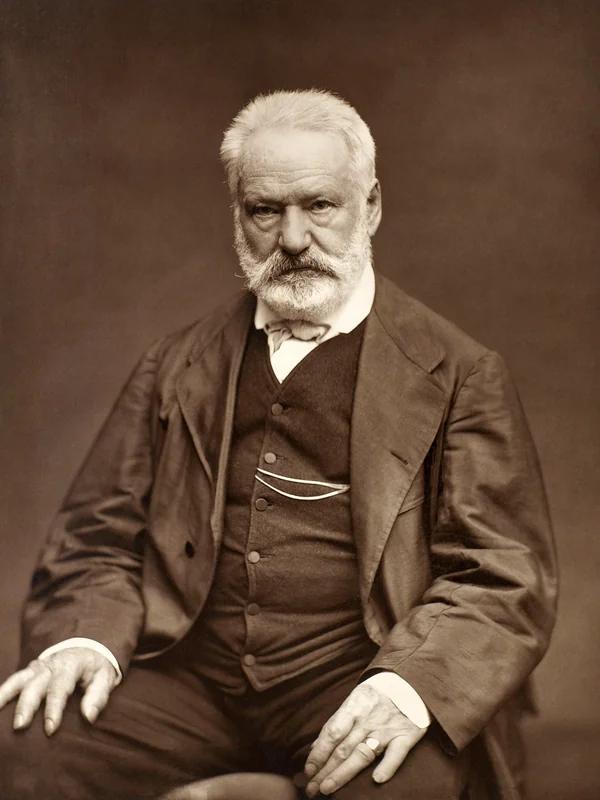
Victor Hugo
The giant of French literature
Victor Hugo was born in France at the time of Napoleon. His father was a general in Napoleon's army; his mother was a quiet, devoutly religious woman. They didn't get along, which meant young Victor moved around constantly as a kid, between Paris, Italy, and Spain wherever his father was stationed.
Victor knew by the time he was 14 that he wanted to be a writer. He told his diary, "I want to be either Chateaubriand or nothing," meaning he wanted to be the most famous writer in France. By 30, he basically was. His plays caused riots. His poems sold out. His novels were translated all over Europe.
Quick Facts
- Born: February 26, 1802
- From: Besançon, France
- Job: Novelist, poet, politician
- Famous for: The Hunchback of Notre Dame, Les Misérables
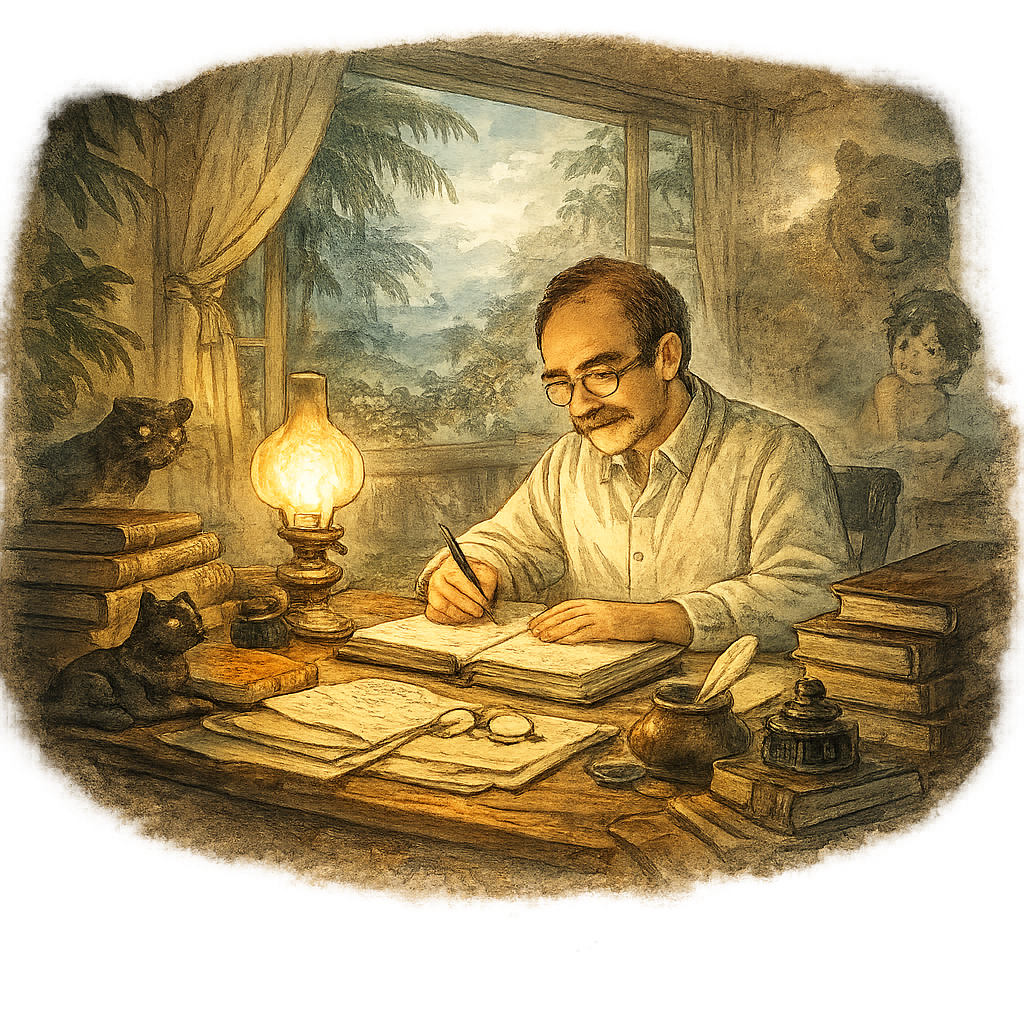
When Hugo died, more than two million people lined the streets of Paris for his funeral procession. It's still one of the biggest funerals in history for any non-royal person.
His Famous Stories
Read Hugo's stories on Worldly
Hugo wrote enormous, emotional, big-hearted books. On Worldly, every page is adapted to your reading level.
1831Quasimodo, the hunchbacked bellringer of Notre Dame, falls in love with a kind gypsy named Esmeralda. The story shakes the city of Paris.
1862Jean Valjean steals bread to feed his sister and goes to prison for 19 years. When he gets out, a single act of kindness changes everything.
His Life, Year by Year
From soldier's son to literary giant
Hugo's life spanned almost the entire 1800s and shaped French history along the way.
Born in eastern France
Victor Marie Hugo is born in Besançon, France. His father is a general in Napoleon's army.
A teenage poet
At 15, Victor wins a poetry contest at the Académie française. He knows by now what he wants his life to be.
First book
Victor publishes his first book of poetry. King Louis XVIII reads it and gives him a yearly stipend.
The Hunchback of Notre Dame
Hugo publishes Notre-Dame de Paris, the story of the hunchbacked bellringer Quasimodo and the gypsy Esmeralda. It's a huge hit, and it helps save the actual Notre-Dame Cathedral from being torn down.
Elected to the Académie française
Victor is elected to the Académie française, France's most prestigious literary society. He's 39.
Exile
After the politician Louis-Napoleon (Napoleon's nephew) seizes power, Victor publicly opposes him. To save his life, Victor flees France and spends the next 19 years in exile, mostly on the British Channel Islands.
Les Misérables
In exile, Hugo publishes Les Misérables, a giant 1,500-page novel about a poor man named Jean Valjean, a kindly bishop, a relentless police officer, and the people of revolutionary Paris. The world reads it.
He comes home
Louis-Napoleon falls from power. Victor returns to Paris a hero. The crowd that meets his train is enormous.
Two million say goodbye
Victor Hugo dies in Paris at age 83. Over two million people line the streets for his funeral. He's buried in the Panthéon, France's tomb for national heroes.
Why His Books Still Matter
Three things Hugo fought for through his stories
Hugo wasn't just telling stories. He was using his books to argue for a kinder world.
Notre Dame · 1831
Save the cathedral
In Hugo's day, France was tearing down old Gothic buildings, including parts of Notre-Dame. Hugo's novel made people fall in love with the cathedral again, and the city restored it instead.
Les Misérables · 1862
Compassion for the poor
Jean Valjean steals a loaf of bread for his starving sister and goes to prison for nineteen years. Hugo wanted readers to see how easily poverty could destroy a person, and to do something about it.
Last Day of a Condemned Man · 1829
Against the death penalty
Hugo argued his whole life against executions. His novella about a prisoner's last day before execution shocked France and helped change how people thought about capital punishment.
Wait… really?!
Six surprising things about Victor Hugo
His funeral was massive
When Hugo died in 1885, more than two million people lined the streets of Paris to say goodbye. It's still one of the largest funerals ever held for any non-royal person.
His novel saved Notre Dame
The famous cathedral was falling apart and slated for demolition when Hugo published his 1831 novel. The book made people love Notre Dame again, and Paris restored it instead.
He wrote standing up, in the nude
When Hugo had a book deadline, he sometimes worked stark naked at a tall desk by the window. He believed it helped him write faster. His servants had to bring him his clothes when visitors arrived.
He lived 19 years in exile
Hugo spent almost two decades living on the British Channel Islands after speaking out against Napoleon III. He kept writing the whole time.
He fought for free schools
Hugo argued that every child in France should be entitled to a free education, decades before that became law. He believed schools were the most important thing a country could give its kids.
His son edited his books
Hugo's son Charles helped edit and publish his father's enormous output. Victor wrote SO MUCH that getting it all into print was a full-time job for someone else.
Good questions, answered
Victor Hugo FAQ
Is the Disney Hunchback the same as the book?+
Not really! The Disney movie has a happy ending. Hugo's original book is much darker, more tragic, and full of complicated grown-up themes. The Worldly version is adapted carefully for younger readers.
Is Les Misérables a real story?+
It's fiction, but Hugo set it during real events, the French Revolution and the June Rebellion of 1832. The characters are made up, but the world they live in really existed.
Why was he exiled?+
Hugo spoke out publicly against Louis-Napoleon (Napoleon's nephew) when Louis-Napoleon seized power and made himself emperor. To save his life, Hugo fled France. He spent 19 years on the British Channel Islands before returning in triumph.
What age is The Hunchback good for?+
The original is for older readers because it's long and tragic. The Worldly version is adapted for ages 9 and up, with the saddest moments handled gently.
How big was his funeral really?+
Over two million people came. That's more than the entire population of Paris at the time. Streets, balconies, rooftops, all packed. It remains one of the biggest non-royal funerals in history.
Ready for an adventure?
Dive in with Victor Hugo
More Hugo stories coming soon to Worldly. Sign up to be the first to know.