"Oh, what a tangled web we weave when first we practice to deceive!"— Sir Walter Scott, Marmion
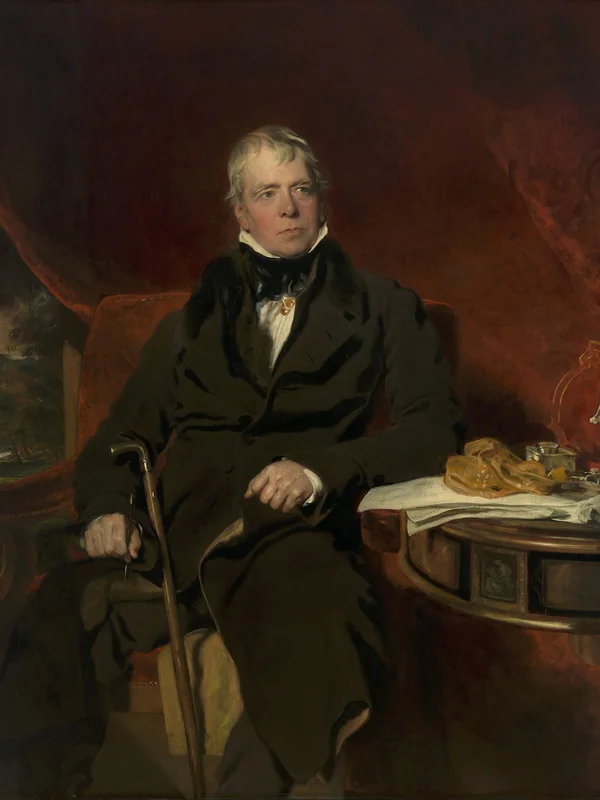
Sir Walter Scott
The inventor of the historical novel
Walter Scott was born in Edinburgh, Scotland. When he was a baby, he caught polio and lost the use of one leg. His family sent him to recover at his grandfather's farm in the Scottish Borders, the rugged country between Scotland and England that had been a war zone for centuries.
Walter spent his recovery listening to old farm workers tell stories and sing songs about Scottish history, border raids, kings, queens, battles, ghosts. He memorized them. By the time he was a teenager, he could recite hundreds of old Scottish songs.
Quick Facts
- Born: August 15, 1771
- From: Edinburgh, Scotland
- Job: Lawyer, poet, novelist
- Famous for: Ivanhoe, Rob Roy, The Lady of the Lake
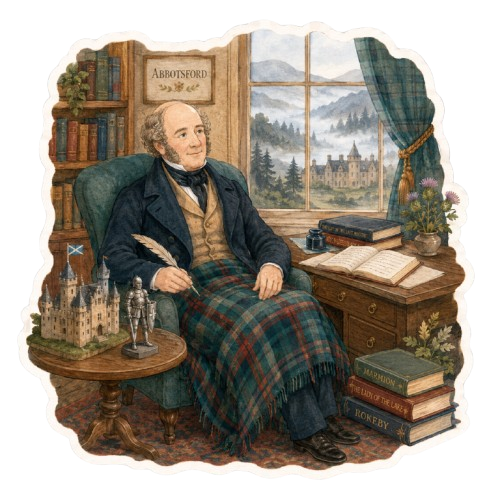
Walter Scott's novels made tourism to Scotland popular for the first time. English visitors came to see castles and lochs they'd read about in his books. He's a big reason Scotland still markets itself as a land of misty mountains and tartan kilts.
His Famous Stories
Read Scott's stories on Worldly
Scott wrote big, exciting historical adventures full of knights, outlaws, and castles. On Worldly, every page is adapted to your reading level.
1819A Saxon knight returns from the Crusades to a Norman-ruled England. Jousts, sieges, Robin Hood, kidnappings, and a beautiful daughter all collide in this huge medieval tale.
1817A young Englishman travels to the Scottish Highlands and meets the legendary outlaw Rob Roy MacGregor. Adventures and intrigue follow.
His Life, Year by Year
From Edinburgh lawyer to literary giant
Scott's life was packed with writing, debt, building castles, and helping put Scotland on the literary map.
Born in Edinburgh
Walter Scott is born in Edinburgh, Scotland.
He gets polio
At age 2, Walter catches polio and loses the use of his right leg permanently. He'll walk with a limp his whole life.
He becomes a lawyer
Walter qualifies as a lawyer and starts a legal practice in Edinburgh.
Border songs
Walter publishes a collection of old Scottish folk songs called Minstrelsy of the Scottish Border. It's a hit.
Lay of the Last Minstrel
Walter publishes his first long poem, The Lay of the Last Minstrel. It's a massive hit and makes him famous as a poet.
Waverley
Walter publishes his first novel, Waverley, anonymously. It sells out fast. He'll publish 26 more novels.
Ivanhoe
Walter publishes Ivanhoe, a thrilling medieval tale of knights, jousts, and Robin Hood-style outlaws. It introduces the world to a romantic vision of the Middle Ages.
Made a baronet
King George IV makes Walter a baronet, so now he's Sir Walter Scott.
Financial disaster
Walter's publishing business collapses. He's deeply in debt. Rather than declare bankruptcy, he commits to writing his way out, hundreds of pages a year, paying off creditors. The strain wrecks his health.
He dies at his estate
Walter dies at his beloved country estate Abbotsford at age 61, having paid off most of his debts through sheer writing.
What He Invented
Three things Scott gave fiction
Walter Scott did big new things with the novel that everyone copied afterwards.
Waverley · 1814
The historical novel
Before Scott, novels were usually about contemporary life. Scott invented the historical novel, fiction set in real periods of the past with real historical context. Every Hilary Mantel and Patrick O'Brian and Bernard Cornwell follows him.
Ivanhoe · 1819
The medieval knight romance
Scott's Ivanhoe is the book that put 'noble knight,' 'jousting tournament,' and 'damsel in distress' into the popular imagination. Almost every King Arthur, Robin Hood, and Dragon movie owes Ivanhoe.
Tourism
He made Scotland famous
Scott's books made the Scottish Highlands, castles, lochs, and tartans famous around the world. Tourism in Scotland is partly his invention. King George IV even wore a kilt for his visit to Edinburgh, all thanks to Scott.
Wait… really?!
Six surprising things about Walter Scott
He published his novels anonymously
Scott didn't put his name on his first novels. He called himself 'the author of Waverley.' Everyone in Edinburgh knew it was Scott, but he didn't officially admit it until 1827.
He had polio as a kid
Scott caught polio at age 2 and lost the use of his right leg permanently. He walked with a limp his whole life. It didn't slow him down.
He wrote himself out of debt
When his business collapsed in 1826, Scott owed an enormous sum. Rather than declare bankruptcy, he committed to writing a novel a year to pay off creditors. He nearly did it. The strain killed him.
He built his own castle
Scott used his book profits to build a fake medieval castle in southern Scotland called Abbotsford. It's still standing and still gets visitors.
He helped invent Scottish tourism
Scott's novels made the Scottish Highlands, castles, and tartan kilts famous worldwide. When tourists started flooding into Scotland in the 1800s, they came looking for the world Scott had written about.
He inspired opera
Many of Scott's novels were turned into operas, including Donizetti's Lucia di Lammermoor, which is still performed at opera houses today.
Good questions, answered
Walter Scott FAQ
What's a baronet?+
A baronet is a hereditary title in the United Kingdom, lower than a baron but higher than a knight. Walter Scott was made a baronet by King George IV in 1820, which is why we say 'Sir Walter Scott.'
Is Ivanhoe a real person?+
No, Ivanhoe is fictional, but Scott set the book in real 12th-century England during the reign of Richard the Lionheart. Many side characters like Robin Hood and Prince John are based on real historical figures.
What age is Ivanhoe good for?+
The original is for older readers (probably 12+) because of its dense language. The Worldly version is adapted for ages 9 and up, with the adventure plot kept front and center.
Did he really invent the historical novel?+
Pretty much! Other writers had occasionally set stories in the past before Scott, but he was the first to make historical research and accuracy the heart of fiction. The whole tradition of historical novels comes from him.
Is the world's first historical novel really Scottish?+
Yes! Scott's Waverley (1814) is set during the 1745 Jacobite Rising in Scotland. It launched the historical novel as a genre, and most of Scott's most famous books are set in Scottish history.
Ready for an adventure?
Dive in with Walter Scott
More Scott stories coming soon to Worldly. Sign up to be the first to know.