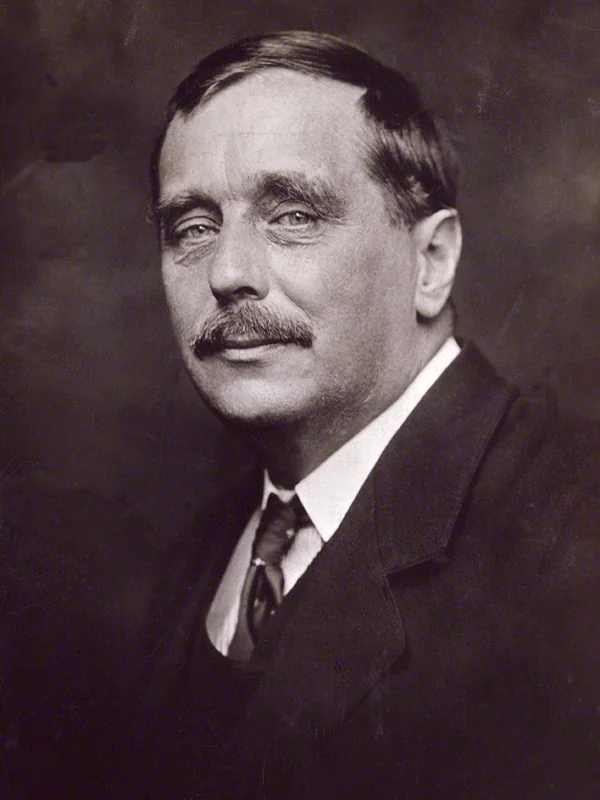
"We all have our time machines. Some take us back, they're called memories. Some take us forward, they're called dreams."— H.G. Wells
H.G. Wells
The writer who imagined tomorrow
Herbert George Wells, everyone called him Bertie as a kid, grew up poor in a small English town. His mom was a maid, his dad sold pots and pans. There wasn't much money for school.
Then, at age 7, Bertie broke his leg. He had to stay in bed for weeks. His dad kept bringing him books from the public library. Bertie devoured them, adventure stories, history, science, anything. By the time the leg healed, his head was packed with ideas about what could be possible.
Quick Facts
- Born: September 21, 1866
- From: Bromley, England
- Job: Writer & teacher
- Famous for: The Time Machine, War of the Worlds, The Invisible Man
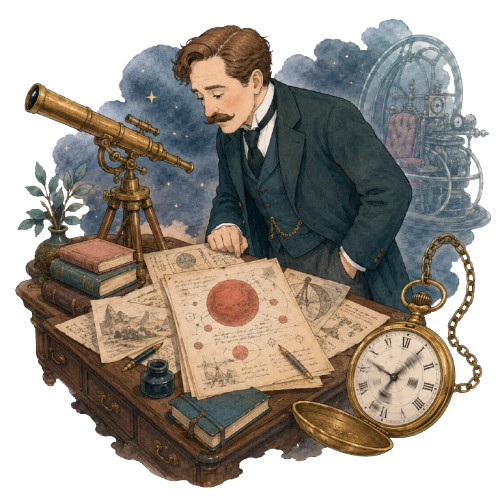
When his radio play of War of the Worlds aired in America in 1938, some listeners thought aliens were really invading and panicked!
His Famous Adventures
Read Wells's stories on Worldly
Wells wrote pure science fiction, fast, exciting, full of big ideas. On Worldly, every page is adapted to your reading level.
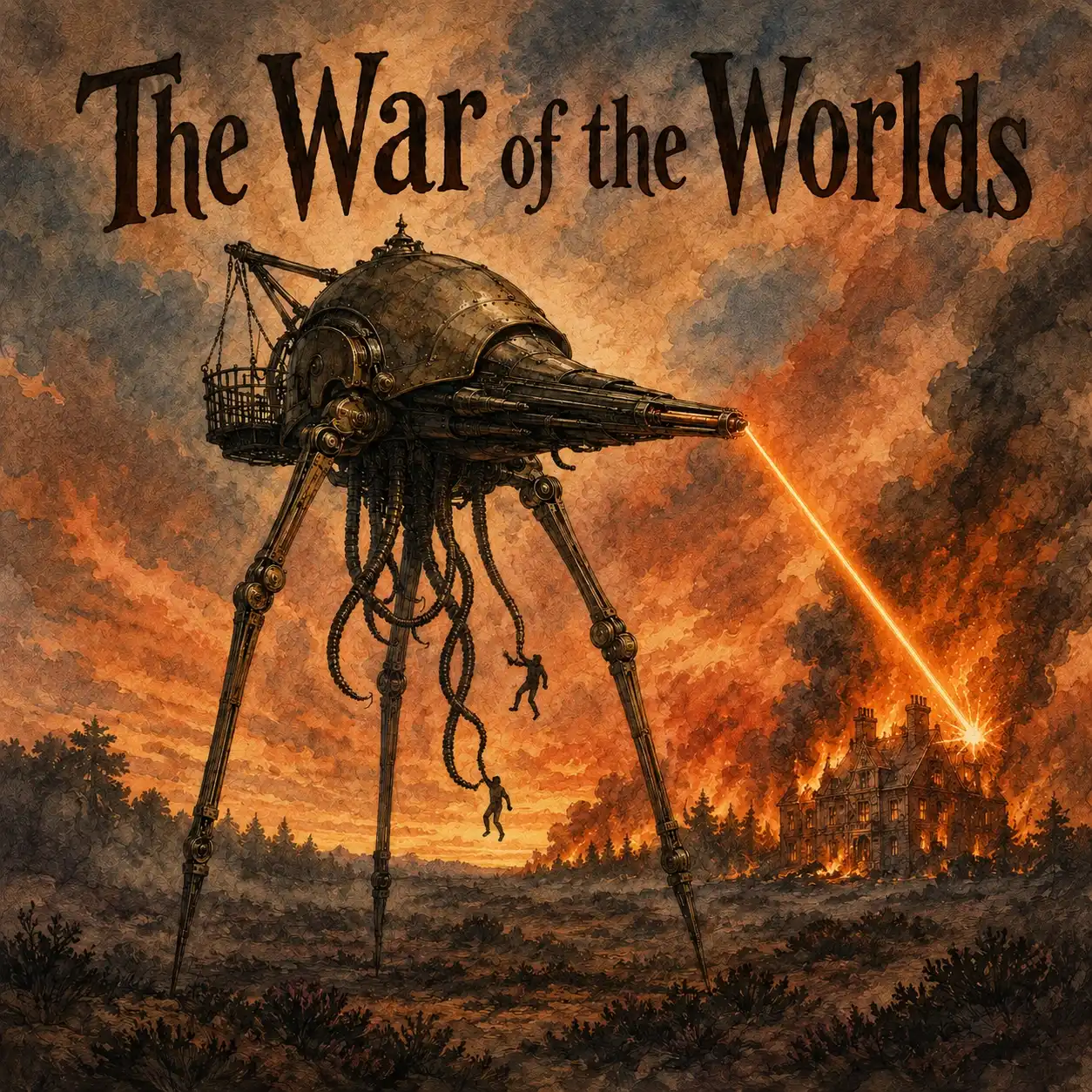 ★ On Worldly
1898Martians land in tripods and start vaporizing everything. One man tries to survive long enough to find his family. The original alien-invasion story.
1895A scientist builds a machine and travels 800,000 years into the future. What he finds is not what anyone expected.
1897A scientist figures out how to make himself invisible, and can't undo it. The original 'great power, terrible idea' story.
1896A shipwrecked man washes up on a remote island where a doctor is doing very strange experiments with animals.
His Life, Year by Year
From broken leg to seeing the future
Wells didn't just write about the future, he predicted a lot of it. Tanks. Atomic bombs. Email. He saw them coming.
Born to a struggling family
Herbert George Wells is born in Bromley, England. His family is poor, and there's not much money for school.
The broken leg that changed everything
7-year-old Bertie breaks his leg and spends weeks in bed. His dad keeps bringing books from the library. Bertie reads everything. The habit sticks for life.
Off to study science
A teacher notices Bertie is brilliant. He wins a scholarship to study science in London, where one of his teachers is the famous biologist T.H. Huxley.
The Time Machine
Wells publishes The Time Machine. It's the first time anyone has written about a vehicle that travels through time. The whole idea of a "time machine" is his invention.
The Invisible Man
A scientist discovers how to make himself invisible, but can't reverse it. Wells turns the idea into one of the most famous science-fiction stories ever written.
War of the Worlds
Aliens from Mars land in England with weapons no human can stop. Wells invents alien invasions in a single book, and every spaceship-attack movie since has copied it.
The radio broadcast panic
A radio version of War of the Worlds airs in America with news-bulletin style sound effects. Some listeners think aliens are really invading. Newspapers report mass panic the next day.
A long career, a quiet end
Wells dies in London at age 79. He wrote over 50 books, many of them predicting things that came true, tanks, atomic bombs, even something that looks a lot like the internet.
The Future He Imagined
He dreamed it. Then it kind of happened.
Wells wasn't a prophet, but he was a really good guesser. A surprising number of his sci-fi ideas turned into real science.
Time Machine · 1895
Time travel
Wells invented the idea of a machine you climb into and travel through time with. Every time-travel movie or show since, Doctor Who, Back to the Future, every one, owes him.
War of the Worlds · 1898
Alien invasion
Martians landing in tripods and zapping cities with heat-rays. No one had ever written this before. Wells invented the whole genre.
The World Set Free · 1914
Atomic bombs
In 1914, Wells wrote about bombs powered by atomic energy, thirty years before real scientists figured out how to build them. He even called them "atomic bombs."
Wait… really?!
Six surprising things about H.G. Wells
He was a science teacher first
Before Wells was a famous writer, he taught biology and chemistry at a school in London. His science background made his fiction feel real.
He kept-coined 'time machine'
The phrase 'time machine' didn't exist before Wells wrote his 1895 book. He invented both the words and the concept.
He predicted the internet
Wells wrote about a 'World Brain', a global library that anyone could access from anywhere. Sound familiar?
His radio play caused a real panic
The 1938 radio version of War of the Worlds aired during the news hour, and some listeners thought it was a real Martian invasion. Newspapers reported people fleeing their homes.
He met every famous person of his time
Wells was a celebrity. He met U.S. presidents, Russian leaders, scientists, and other famous writers. He once had tea with both Theodore Roosevelt and Vladimir Lenin (not at the same time).
He wrote over 50 books
Sci-fi novels, history books, predictions about the future, even a short biology textbook, Wells couldn't stop writing.
Good questions, answered
H.G. Wells FAQ
What does H.G. stand for?+
Herbert George! But his friends called him 'Bertie' as a kid, and the publishing world has always called him H.G. He preferred the initials, they sounded more serious.
Did he really invent science fiction?+
He didn't invent it alone, Jules Verne and Mary Shelley wrote sci-fi too. But Wells invented so many key ideas (time machines, alien invasions, invisibility) that he's called one of the 'fathers of science fiction.'
What's the radio panic about?+
On Halloween 1938, actor Orson Welles broadcast a radio version of War of the Worlds in America. It used fake news bulletins. Some listeners tuned in late and thought aliens were really attacking New Jersey. Newspapers said people fled their homes, though historians think the panic was exaggerated.
What age are his stories good for?+
Wells's stories have action, danger, and big sci-fi ideas, perfect for ages 7 and up. The Worldly version softens the scariest moments while keeping the thrill.
Did he predict anything besides time travel?+
Loads! Tanks (he called them 'Land Ironclads'), atomic bombs (in a 1914 book), satellite TV, and a global online library. He wasn't always right, but he guessed a LOT correctly.
Ready for an adventure?
Dive in with H.G. Wells
Start with The War of the Worlds, adapted to fit your reading level. Free in the Worldly app.